
Subtotal $0.00

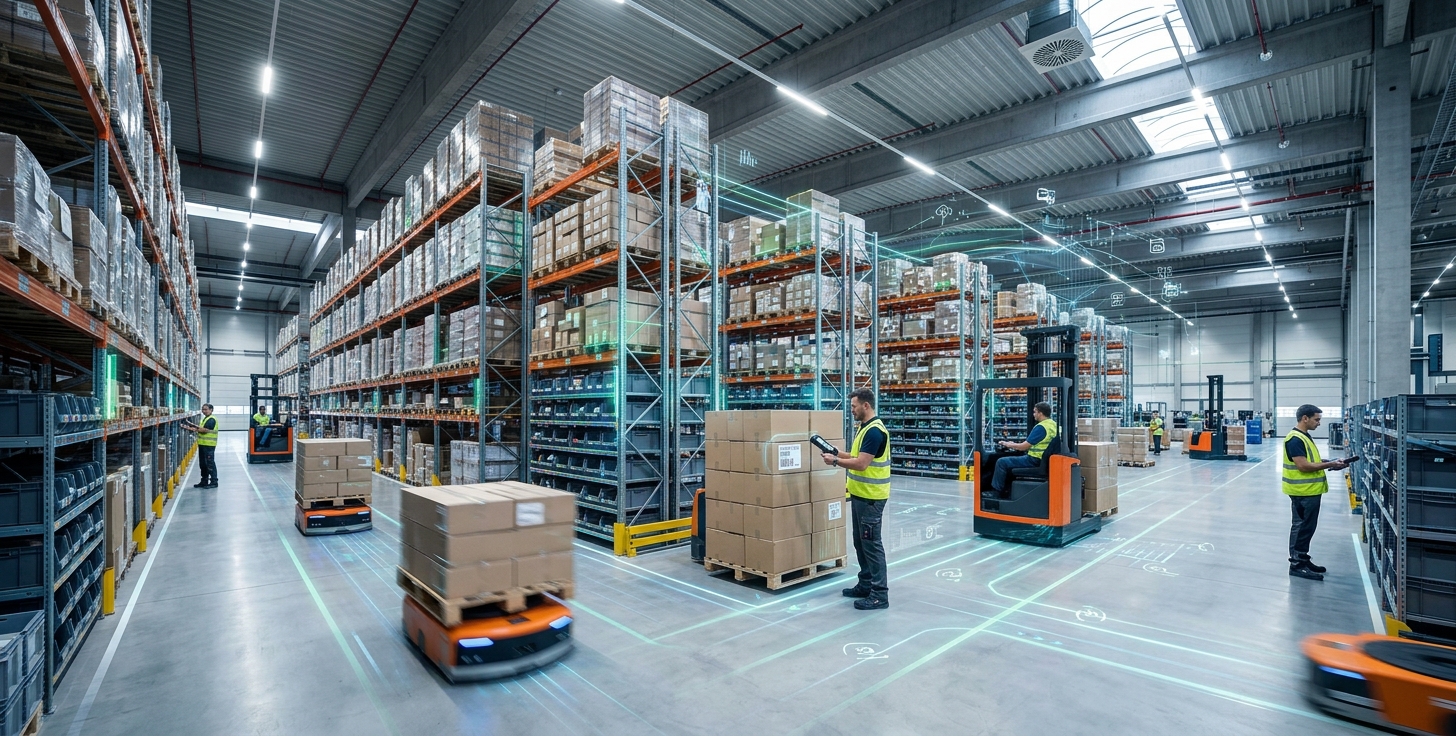
For years, warehouse digital transformation meant replacing paper with screens, spreadsheets with software and manual records with digital transactions.
That definition is no longer enough.
Today’s warehouses face rising customer expectations, complex order profiles, labour shortages, demand volatility and rapid automation. The challenge is not simply to digitise individual tasks. It is to connect the entire operation into an intelligent, responsive and data-driven ecosystem.
This is where the role of the Warehouse Management System (WMS) is changing.
A modern WMS is no longer just a tool for recording inventory movements. It is becoming the digital backbone that connects warehouse operations, people, equipment, automation and wider enterprise systems.
The Problem with Digitising Processes in Isolation
Many organisations have already begun their digital transformation journey. They may use barcode scanners for inventory tracking, spreadsheets for planning, ERP systems for order management and separate applications for transportation, automation or reporting.
On the surface, the operation may appear digital. However, digital tools do not automatically create a digitally transformed warehouse.
Problems arise when systems operate independently. Data must be transferred manually, warehouse teams spend time searching for information and supervisors rely on experience rather than real-time operational intelligence. Automation systems may also generate valuable data that remains disconnected from planning and execution processes.
The result is a warehouse that is digital in parts but fragmented as a whole.
True transformation begins when information moves seamlessly across the operation and every stakeholder works from the same version of operational reality. A connected warehouse can reduce manual handoffs, improve decision-making and respond more quickly when conditions change.
From System of Record to System of Intelligence
Traditionally, a WMS was viewed primarily as a system of record. It answered essential questions:
- Where is the inventory?
- How much stock is available?
- Which order needs to be picked?
- What has been received or dispatched?
These capabilities remain fundamental. However, modern warehouse leaders need systems that can support more complex decisions:
- What should be picked first?
- Which storage locations are creating unnecessary travel?
- Where is a bottleneck likely to develop?
- Which orders are at risk of missing their dispatch window?
- How should labour and equipment be allocated during a demand surge?
This represents a significant shift. The warehouse of the future will not simply record what has already happened. It will use operational data to help determine what should happen next.
A modern WMS can provide the visibility and coordination required to connect people, automation and digital systems. Instead of operating as an isolated transaction-processing tool, it can become a central platform for managing warehouse activity and improving operational performance.
Real-Time Visibility Is No Longer Enough
For many years, real-time visibility was considered the ultimate goal of warehouse digital transformation.
Today, visibility alone is not enough.
Knowing that inventory is delayed, a picking zone is congested or a shipment is approaching its cutoff time is valuable. However, the real advantage comes from being able to respond quickly and effectively.
The next phase of warehouse transformation is moving from:
Visibility → Intelligence → Action
A digitally connected warehouse should not only provide dashboards showing operational performance. It should help managers and teams identify exceptions, understand their impact and take corrective action.
For example, if a sudden increase in orders creates congestion in a picking zone, the right digital infrastructure can help managers assess the situation and make better decisions about task allocation, replenishment priorities or workforce deployment.
The value of data is therefore not determined by how much information a warehouse collects. Its value lies in how quickly that information can be converted into meaningful operational action.
The WMS as the Foundation for Automation
Automation is one of the most important developments in modern warehousing. Autonomous mobile robots, automated storage and retrieval systems, robotic picking, machine vision and AI-enabled tools are changing how warehouses operate.
However, automation without digital coordination can create another layer of complexity.
A warehouse does not become intelligent simply because robots are operating inside it. Automation needs context. Robots need to understand priorities, automated systems need accurate inventory information and material movement must be coordinated with picking, replenishment and dispatch requirements.
Human workers and automated equipment must also operate within connected workflows.
This is why the role of the WMS is becoming increasingly important. A strong digital foundation enables warehouse operators to integrate new technologies into their operations rather than creating separate technology silos.
The objective should not be to deploy the maximum amount of automation. It should be to create an operation where technology, processes and people work together efficiently.
As AI and physical automation become more closely connected, digital coordination will become even more important. A WMS can help provide the operational context required for automation to deliver measurable value.
Building the Digital Backbone of the Warehouse
The most important question facing warehouse leaders is no longer whether digital transformation is necessary. The question is whether the organisation has the right digital foundation to support it.
Before investing in the next automation project or adding another specialised technology, businesses should examine how information currently flows across their warehouse operations.
- Where are the manual handoffs?
- Where does data become fragmented?
- Which decisions rely on spreadsheets?
- How quickly can teams identify operational exceptions?
- Can new technologies integrate easily with the existing environment?
These questions often reveal that the starting point for transformation is not necessarily more hardware.
- It is better connectivity.
- Better data.
- Better workflows.
- And a stronger digital backbone.
At SCMProFit, we believe the future of warehousing lies in creating connected and intelligent operations where people, processes, data and technology work together seamlessly. A modern WMS can provide the foundation for this transformation, helping businesses move beyond simply digitising warehouse activities and towards building operations that are visible, connected, adaptable and ready for the future.
The warehouse of tomorrow will not be defined by how much technology it contains. It will be defined by how intelligently that technology works together.
