
Subtotal $0.00

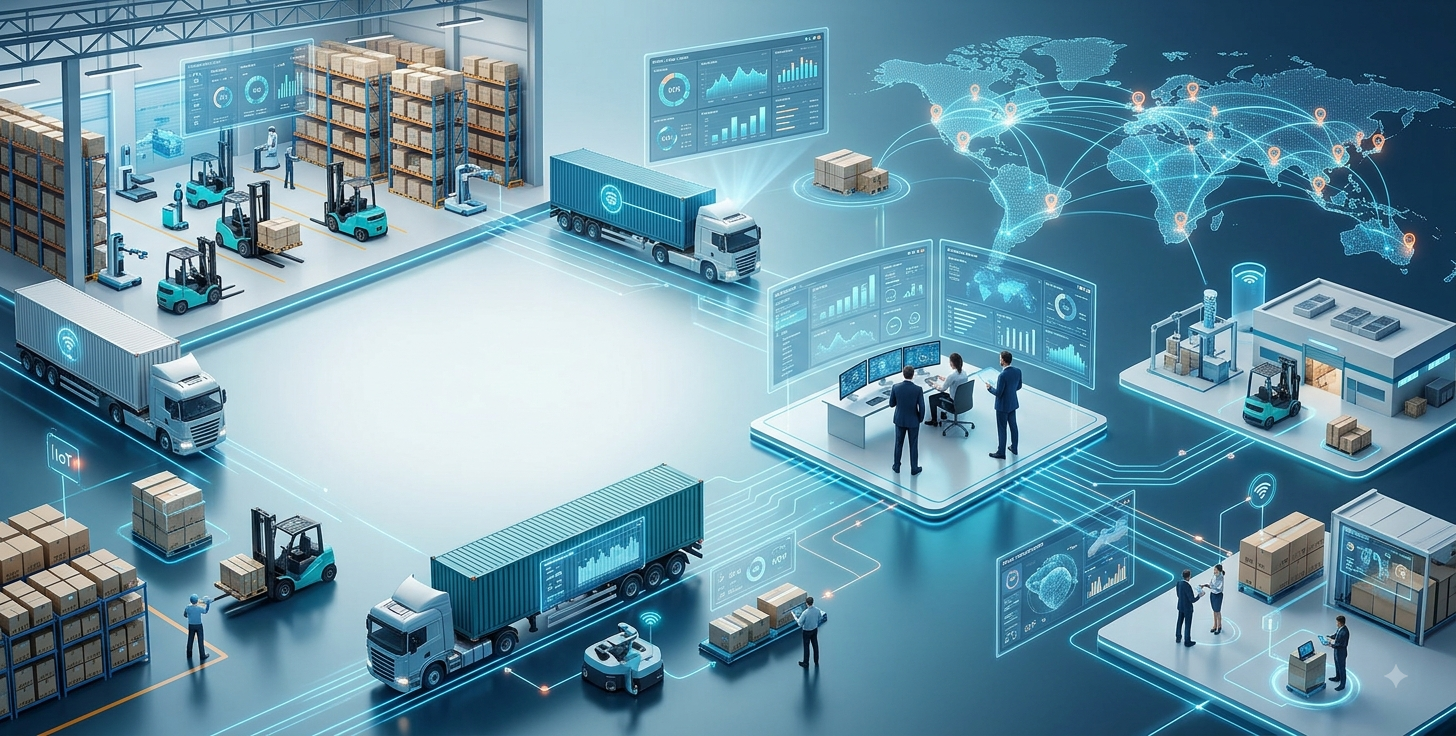
From Reactive Operations to Intelligent Ecosystems
For decades, supply chains were viewed primarily as operational functions responsible for moving goods from one point to another. Success was measured by how efficiently products were sourced, stored, transported, and delivered. However, in today’s hyperconnected and unpredictable business environment, supply chains have evolved into strategic assets that directly influence customer satisfaction, profitability, and business resilience.
The modern supply chain is no longer a linear chain of activities it is an intelligent ecosystem where information flows as critically as products themselves. Organizations that continue to rely on fragmented systems, manual processes, and limited visibility are finding it increasingly difficult to meet growing customer expectations and respond to market disruptions. Meanwhile, businesses embracing digital transformation are gaining a significant competitive advantage through improved agility, visibility, and decision-making.
The challenge facing supply chain leaders today is not simply managing inventory or coordinating transportation. It is about creating a connected network where every stakeholder from suppliers and warehouse operators to transportation partners and customers—can access accurate, real-time information. Visibility has become the foundation of effective supply chain management. Without it, businesses are forced to react to problems after they occur. With it, they can anticipate disruptions, optimize resources, and make proactive decisions.
The rise of e-commerce, omnichannel fulfillment, and global sourcing has added new layers of complexity to supply chain operations. Customers now expect faster deliveries, real-time order tracking, and seamless service regardless of where they are located. These expectations place enormous pressure on logistics providers and enterprises to maintain operational excellence while controlling costs. Traditional methods can no longer keep pace with these demands.
Technology is transforming how supply chains operate. Artificial Intelligence, predictive analytics, automation, and cloud-based platforms are enabling organizations to move beyond reactive management and toward predictive and prescriptive operations. Instead of simply reporting what happened yesterday, intelligent supply chain systems can forecast demand fluctuations, identify potential bottlenecks, recommend optimal inventory levels, and help businesses prepare for future scenarios.
Warehousing, often considered the heart of supply chain operations, is undergoing a remarkable transformation. Modern warehouses are becoming highly connected environments where inventory movements are tracked in real time, workflows are optimized automatically, and managers gain complete visibility into operations through intuitive dashboards. The result is greater accuracy, faster fulfillment, and improved resource utilization.
Transportation is experiencing a similar evolution. Real-time tracking, route optimization, and automated planning tools are helping organizations reduce costs while improving delivery performance. By leveraging data-driven insights, companies can make smarter decisions about carrier selection, shipment consolidation, and resource allocation. This level of intelligence not only improves efficiency but also enhances customer experience through greater reliability and transparency.
At SCMProFit, we believe that the future of supply chain management lies in connectivity, intelligence, and adaptability. Businesses need more than isolated software solutions; they require an integrated platform that unifies warehousing, transportation, freight management, and distribution into a single digital ecosystem. When data flows seamlessly across operations, organizations gain the visibility needed to make informed decisions and respond quickly to changing market conditions.
The supply chains that will thrive in the years ahead are those that can transform data into actionable insights. They will be agile enough to navigate uncertainty, resilient enough to withstand disruptions, and intelligent enough to continuously optimize performance. Technology will not replace supply chain professionals; rather, it will empower them with the tools needed to make faster, smarter, and more strategic decisions.
As global markets continue to evolve, supply chain excellence will become a defining factor for business success. Organizations that invest in digital transformation today are not simply improving operations—they are building the foundation for sustainable growth, customer loyalty, and long-term competitiveness.
The future of supply chain management is already here. The question is no longer whether businesses should embrace digital transformation, but how quickly they can adapt to remain competitive in an increasingly connected world. SCMProFit is committed to helping organizations navigate this journey by delivering intelligent supply chain solutions that drive visibility, efficiency, and growth across every stage of the logistics lifecycle.
