
Subtotal $0.00

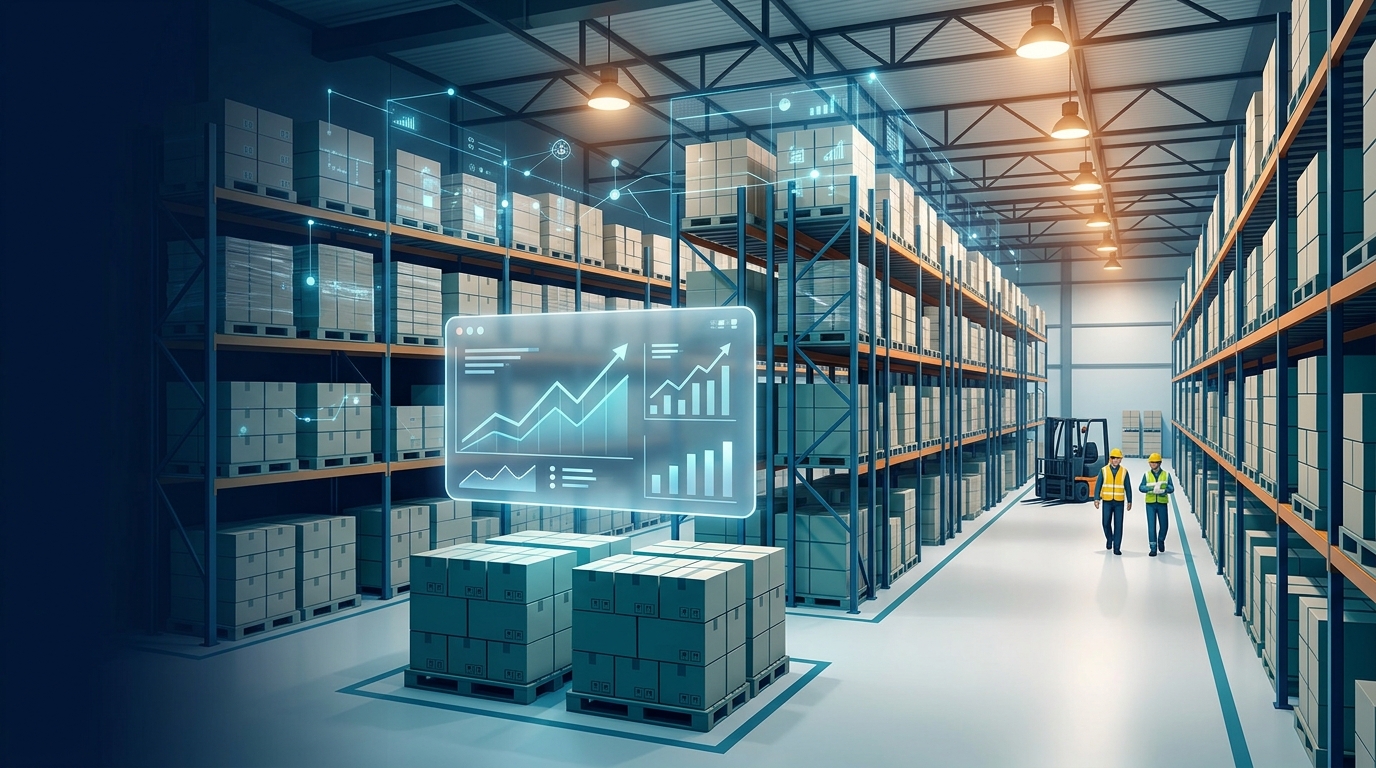
E-commerce volumes across Malaysia, the Philippines, Indonesia, and the wider ASEAN region are growing faster than most warehouse operations were designed to handle. Order volumes spike overnight around regional sales events, last-mile expectations keep tightening, and labor availability in key logistics hubs remains unpredictable. For supply chain leaders, the question is no longer whether to modernize warehouse operations, it’s how quickly they can do it without disrupting what’s already running.
The Cost of Standing Still
Manual, paper-based, or loosely integrated warehouse processes create three compounding problems:
- Inventory blind spots. Without real-time visibility, teams over-order to compensate for uncertainty, tying up working capital in safety stock.
- Slower fulfilment cycles. Manual picking, packing, and routing decisions add hours to processes that customers now expect to happen in minutes.
- Reactive decision-making. Warehouse managers spend more time firefighting stockouts and mis-shipments than planning ahead.
These issues don’t stay contained to the warehouse floor — they ripple into procurement, customer service, and ultimately revenue.
Where AI Actually Moves the Needle
The value of AI in warehousing isn’t in replacing people — it’s in giving warehouse teams the visibility and prediction they’ve never had:
1. Demand-aware inventory positioning Rather than static reorder points, AI models continuously adjust stocking levels based on real demand signals — seasonality, regional promotions, even weather disruptions to inbound shipments.
2. Smarter pick-path optimization Machine learning can reorganize pick routes dynamically as order profiles shift throughout the day, cutting travel time across the warehouse floor without requiring a physical redesign.
3. Predictive exception handling Instead of discovering a bottleneck after it’s caused a delay, AI-driven monitoring flags anomalies — a slowing conveyor line, a mismatched SKU count — while there’s still time to intervene.
4. Labor and capacity forecasting For warehouses managing seasonal peaks (Ramadan sales in Malaysia and Indonesia, 11.11 and 12.12 in the Philippines), predictive staffing models help avoid both costly overstaffing and service-breaking understaffing.
Why This Matters More in Southeast Asia Specifically
Regional supply chains here operate under conditions that make AI adoption especially high-leverage: fragmented last-mile networks, multiple fulfilment models (own warehouse, 3PL, marketplace-managed), and rapid SME growth that often outpaces internal systems. A warehouse management approach that works in a mature, single-market operation frequently breaks down when applied across Malaysia, Indonesia, the Philippines, and the UAE simultaneously — different regulatory environments, different carrier ecosystems, different customer expectations.
This is exactly why AI-powered warehousing isn’t a “nice to have” bolted onto legacy WMS platforms — it needs to be built into the operational backbone from the start.
The Path Forward
Supply chain leaders don’t need to overhaul everything at once. The most successful transformations we’ve seen start with a single high-impact use case — often demand forecasting or pick-path optimization — prove the ROI, and expand from there. What matters is choosing a platform that can scale that intelligence across multiple warehouses, markets, and fulfilment models without starting from zero each time.
The warehouses that treat AI as core infrastructure — not an add-on — will be the ones setting the pace for supply chain performance across the region over the next few years.
Want to see how AI-powered warehousing applies to your specific operation? Get in touch with the SCMProfit team.
